
Big Internet Seller Services Inc provides e-commerce Services

Get your first Product Photoshoot for FREE! Learn More

Amazon SEO

Amazon price history

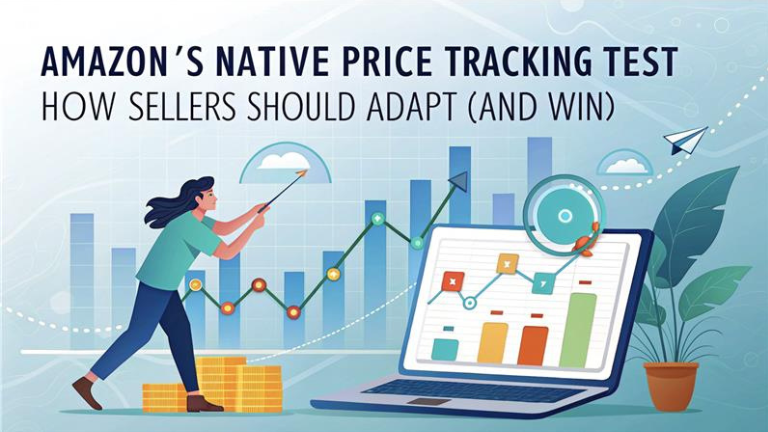
Amazon’s Native Price Tracking Test: How Sellers Should Adapt (and Win)

Price transparency just took a big step forward. Amazon is testing a Price History view on some product pages, and its AI assistant Rufus already lets some shoppers ask for price history directly in the app. For sellers, this is a shift from claims to proof. In this guide, we’ll show how to protect conversion, margins, and Buy Box eligibility in a world where your last 30 days are one tap away.  What changed (and why it matters) In-app price history: Native visibility increases buyer confidence and exposes inflated anchors. Expect stronger promotion policing and higher standards for “deal” messaging. Policy alignment: Amazon’s Fair Pricing posture and ongoing antitrust scrutiny around discounting and Buy Box mechanics mean credibility is a ranking signal—formal or not. Tooling shift: Shoppers get a simple history; sellers still need deep analytics (long horizons, competitor mapping, API feeds) from third-party tools. The stakes: trust, Buy Box, and compliance Consumer advocates have long flagged inflated reference prices. With native history, shoppers can verify in seconds—and Amazon can better enforce price integrity that influences Buy Box visibility.  Diagnose your exposure Pull 30–90-day price histories for top ASINs; mark true troughs. Check parity: if you’re lower off-Amazon, you may risk Buy Box suppression. Map deal cadence (LD/BD/Coupons/Prime) against real historical lows. Engineer credible deals Build a Deal Calendar aligned to actual troughs (not artificial pre-event spikes). Pair promos with content upgrades—new main image/A+, review velocity—to justify price and defend margin. Set repricing floors & margin guards (automation with human review). Execute and monitor Track conversion + glance views during promos; compare to prior events at similar price positions. Watch Buy Box and Unit Session %; if volatility spikes, re-check parity and delivery promises. Post-event: log your new trough and update the calendar. Pro playbook: 7 steps we run for clients Price Integrity Audit (30–90 days per ASIN). Parity & Buy Box risk scan across channels. Contribution-margin floors integrated into repricing. Event design (LD/BD/Coupons/Prime) anchored to real lows. Creative uplift (images, A+, reviews) to support premium pricing. Competitor tracking (longer-horizon histories, rank correlation).  Post-mortems to refine troughs, elasticities, and timing. Want a done-for-you Price Integrity Audit (free for first 10 SKUs)?  Book a strategy call today. Follow Big Internet Ecommerce (BIE) on Instagram & LinkedIn to stay updated with the latest trends in Amazon selling.

Amazon’s Native Price Tracking Test: How Sellers Should Adapt (and Win) Read More »
Amazon List Price Strategy

How to Leverage Amazon List Prices to Boost Your Sales and Customer Engagement

In the competitive world of Amazon selling, setting the right price for your products is crucial to attracting customers. One of the best ways to highlight the value of your offers is by utilizing Amazon List Prices and strikethrough pricing. These tools not only show customers the savings they’ll get but also help build trust and increase conversions. In this blog, we’ll walk you through how Amazon’s List Price system works, why it matters, and how you can use it to stand out from the competition. What is a List Price? A List Price is a reference price that helps customers compare your product’s offer with the original retail price, often the manufacturer’s suggested retail price (MSRP). When Amazon displays the List Price alongside your actual offer price, customers see the savings they’ll get from buying from you. This strikethrough price makes it easy for customers to see how much they’re saving and encourages them to make a purchase. Why List Prices Matter for Sellers List Prices help set clear expectations for customers about the value of your product. By displaying savings through strikethrough pricing, you: Increase visibility: Products with clear savings often rank higher in search results. Boost trust: Customers are more likely to buy when they understand the value they’re getting. Drive conversions: The “anchoring effect” means seeing a higher List Price next to your offer price can influence customers to buy faster. How to Suggest a New or Updated List Price You can suggest a List Price for your products directly in Seller Central. Make sure to keep it consistent with recent sales data, and avoid inflating the price to make savings seem larger than they are. Follow Amazon’s pricing guidelines to ensure your List Price is accepted, and avoid potential penalties. Best Practices for List Prices Use real, recent data when setting a List Price. Keep the price consistent with the manufacturer’s suggested retail price (MSRP). Don’t inflate prices to make discounts look better — this could get your listing flagged. Amazon’s List Price strategy is a powerful tool to drive sales and customer trust. Make sure you’re leveraging strikethrough pricing to highlight the savings your customers are getting. Want to learn how to optimize your Amazon pricing strategy? Schedule a call with Big Internet Ecommerce and let us help you boost your sales today! Follow Big Internet Ecommerce (BIE) on Instagram & LinkedIn to stay updated with the latest trends in Amazon selling.

How to Leverage Amazon List Prices to Boost Your Sales and Customer Engagement Read More »

Amazon Product Performance Spotlight

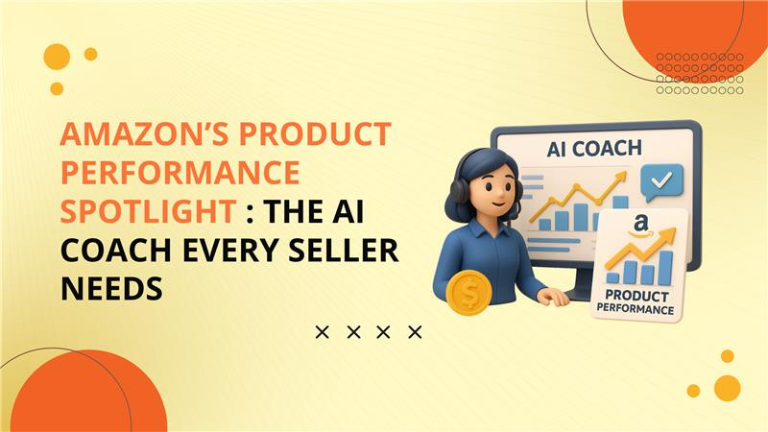
Amazon’s Product Performance Spotlight: The AI Coach Every Seller Needs

For years, Amazon sellers have relied on manual reports to understand why a launch worked — or failed. That changes now. Amazon has introduced Product Performance Spotlight, a new AI-powered dashboard that monitors your listings in real time, benchmarks performance against similar ASINs, and alerts you before problems escalate. It’s designed to be your personal “Amazon coach,” pointing out which SKUs need attention, what’s dragging conversions down, and how to fix it — fast. What Is Product Performance Spotlight? The Spotlight dashboard aggregates operational and advertising data into one AI system that constantly scans for anomalies. It tracks: Inventory health (stock levels, inbound delays) Ad performance trends (spend spikes, underperforming campaigns) Conversion metrics (CTR vs CVR) Category benchmarks (comparison to similar listings) When it detects risk or opportunity, it generates alerts like: “High clicks but low conversions – check image alignment with keyword intent.” These micro-alerts allow sellers to act within 24–48 hours instead of discovering drops in next month’s reports. Why It Matters for Amazon Sellers Real-time insight means proactive growth. Here’s what this tool changes for sellers: Faster recovery: Address issues before rankings or reviews take a hit. Improved ad ROI: Avoid wasted spend on non-converting campaigns. Smarter launches: Track early ASIN behavior to sustain launch momentum. Operational efficiency: Link alerts to your fulfillment and creative teams instantly. Instead of reactive optimization, sellers now get predictive coaching. How Big Internet Ecommerce Helps Sellers Use It Best At BigInternetEcommerce.com, we go beyond alerts — we interpret them. Here’s how we make Product Performance Spotlight work for you: 1. Build an integrated workflow linking Spotlight alerts to your PPC, design, and operations dashboards. 2. Create an Alert Owner Framework — assigning responsibility per SKU. 3. Pair Spotlight data with existing analytics tools like Profit Analytics for end-to-end visibility. 4. Develop weekly SOPs for response and resolution tracking. By doing this, sellers turn AI notifications into profitable actions, not just information. Amazon’s Product Performance Spotlight transforms how sellers manage launches — from guesswork to guided precision. With AI monitoring conversions, ads, and inventory in real time, sellers can respond to issues instantly and protect launch momentum. The key isn’t just using Spotlight — it’s integrating it into your daily workflow. That’s where Big Internet Ecommerce helps you turn data into action and action into growth. Want to integrate Product Performance Spotlight into your Amazon operations? Schedule your strategy call with Big Internet Ecommerce today! Follow Big Internet Ecommerce (BIE) on Instagram & LinkedIn to stay updated with the latest trends in Amazon selling.

Amazon’s Product Performance Spotlight: The AI Coach Every Seller Needs Read More »

Amazon AI Video Generator and Predictive Return Analysis

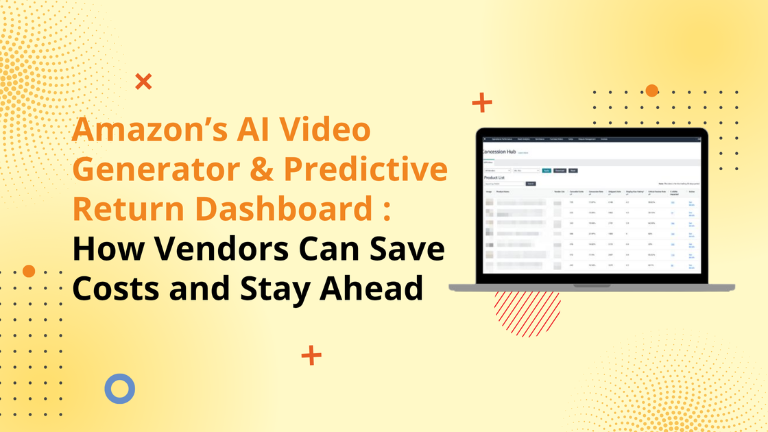
Amazon’s AI Video Generator & Predictive Return Dashboard: How Vendors Can Save Costs and Stay Ahead

Amazon is doubling down on AI and data-driven automation for its vendors. Two major new tools — the AI Video Generator and Predictive Return Analysis dashboard — aim to make creative production faster and return management smarter. For vendors managing hundreds of ASINs or global campaigns, these innovations offer a powerful mix of speed, savings, and foresight. What’s New for Vendors in 2025–2026 1. AI Video Generator: Fast, Free, and Ad-Ready Amazon’s AI Video Generator lets vendors produce Sponsored Ad videos directly from their product detail pages. Key features include: Automatic content extraction (images, descriptions, logo, CTA) Customizable text, music, and layouts Integration with Sponsored Brands and Product Ads This means no more long production cycles or expensive agency edits — vendors can launch new video campaigns in hours, not weeks. 2. Predictive Return Analysis in Concessions Hub This new dashboard gives vendors a forward-looking view of return-related losses. It aggregates metrics like: Conceded units and concession rate Shipped units Critical review rate per ASIN The system then projects potential losses over the next 30 days, helping vendors act early. For example: If a vendor’s return rate spikes for one ASIN, the dashboard might reveal it’s due to damaged packaging or fulfillment issues. Fixing that upstream prevents future returns and restores margin health. How This Changes Vendor Operations Marketing Efficiency: Video generation now takes minutes, enabling faster product launches and creative testing. Financial Foresight: Predictive dashboards turn return management from reactive to proactive. Cross-Team Visibility: Vendor teams can connect marketing and operations through shared dashboards, improving coordination between ads and inventory. ROI Impact: Less ad production cost + fewer defective returns = stronger bottom line. Big Internet Ecommerce’s Playbook for Smart Vendors At Big Internet Ecommerce (BIE), we help vendors transform these Amazon tools into growth drivers: 1. Integrate the AI Video Generator with creative frameworks that boost CTR. 2. Pair Predictive Return data with Profit Analytics to identify hidden margin leaks. 3. Build vendor dashboards tracking both ad performance and return trends. 4. Optimize ad spend using new Amazon automation tools for Sponsored Ads. Amazon’s latest tools signal a bigger shift: AI and predictive analytics are becoming the backbone of successful Vendor operations. By combining these insights with data-led execution, vendors can produce faster ads, cut costs, and prevent returns before they happen — all while staying ahead in Amazon’s increasingly automated ecosystem. Want to unlock Amazon’s AI tools for your Vendor account? Schedule a strategy call with Big Internet Ecommerce today! Follow Big Internet Ecommerce (BIE) on Instagram & LinkedIn to stay updated with the latest trends in Amazon selling.

Amazon’s AI Video Generator & Predictive Return Dashboard: How Vendors Can Save Costs and Stay Ahead Read More »

2026 Amazon MCF and AWD fees

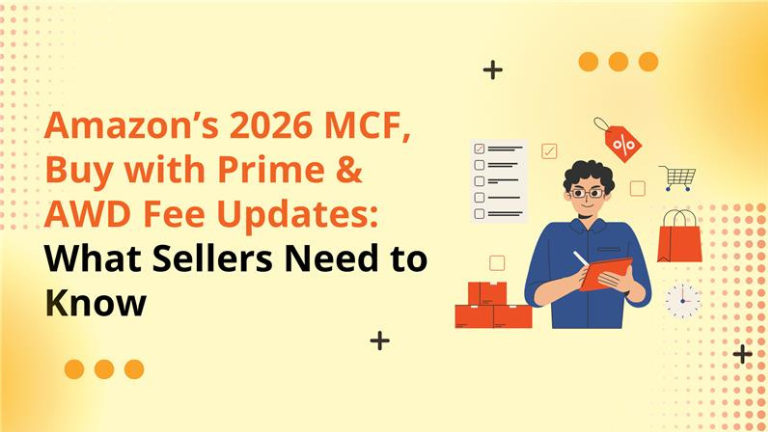
Amazon’s 2026 MCF, Buy with Prime & AWD Fee Updates: What Sellers Need to Know

On January 15 2026, Amazon will roll out fee updates affecting Multi-Channel Fulfillment (MCF), Buy with Prime, and Amazon Warehousing & Distribution (AWD). While the per-unit increases may look small, their combined effect can meaningfully reduce profit margins for FBA and omnichannel brands. Understanding the new rates and re-modeling profitability at the SKU level is critical to staying ahead. Breaking Down the 2026 Fee Changes Multi-Channel Fulfillment (MCF) Amazon MCF fees will increase by about $0.30 per unit on average, mainly impacting 1–2 unit orders. Preferred Pricing remains available to offset some cost for high-volume brands. Buy with Prime Average fulfillment fees rise around $0.24 per unit, bringing them closer to standard FBA rates. Amazon has not confirmed any change to the Prime service fee minimum. Amazon Warehousing & Distribution (AWD) West Region Storage: $0.57 per cu ft per month (≈ 19% increase). Transportation: $1.40 per cu ft base rate (≈ 22% increase). Box Processing: + $0.05 per box. Discount Programs: 10% Smart Storage and 20% Managed Storage discounts continue for participating sellers. Seeing the Real Impact with Profit Analytics Amazon’s expanded Profit Analytics dashboard lets sellers review SKU-level margins with future fee tables built in. You can compare 2025 vs 2026 costs, integrate your own COGS and freight inputs, and forecast profitability per product. Use it to identify which SKUs face the biggest fee impact and adjust inventory, pricing, or advertising accordingly before Q1 2026. Seller Action Plan Before January 2026 1. Audit Profitability: Run Profit Analytics to simulate 2026 margins. 2. Rebalance AWD Inventory: Shift stock from high-cost regions where possible. 3. Leverage Discount Programs: Enroll in Smart or Managed Storage for fee reductions. 4. Review Pricing and Ad Spend: Ensure net contribution margin stays positive post-fee. 5. Monitor SKU Performance: Identify products that may require bundle or cost structure adjustments. These 2026 fee changes reflect Amazon’s continued shift toward regionalized logistics and cost alignment across programs. The brands that will thrive are those that plan ahead — using Profit Analytics to forecast impact, realigning inventory, and keeping their cash flow healthy before the January deadline. Want to see your SKU-by-SKU 2026 impact and build a plan to stay profitable? Schedule a strategy call with Big Internet Ecommerce today! Follow Big Internet Ecommerce (BIE) on Instagram & LinkedIn to stay updated with the latest trends in Amazon selling.

Amazon’s 2026 MCF, Buy with Prime & AWD Fee Updates: What Sellers Need to Know Read More »

2026 Amazon FBA fees

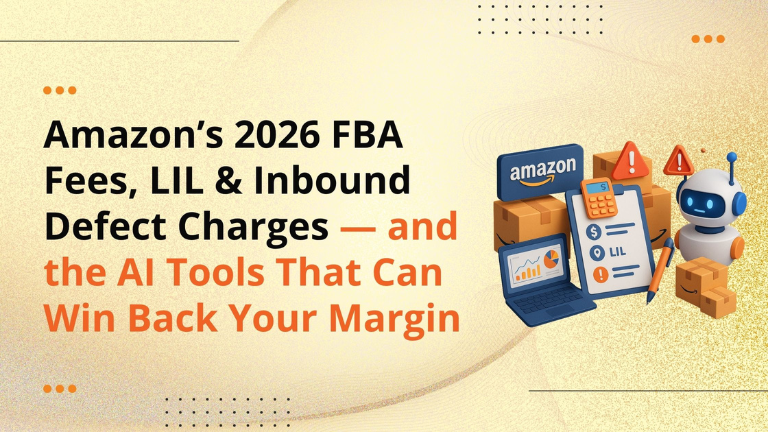
Amazon’s 2026 FBA Fees, LIL & Inbound Defect Charges — and the AI Tools That Can Win Back Your Margin

For many Amazon brands, profitability is decided in the pennies — carton sizes, dim weight, stock days, and ad efficiency. In 2026, Amazon will raise FBA fulfillment fees by an average of $0.08 per unit and adjust several adjacent fees (LIL, inbound, returns). The good news: Amazon also expanded AI-powered Video Generator so you can lift conversion without big creative budgets. This guide turns the policy changes into a concrete playbook — what’s changing, where margin leaks, and how to counter with operations and creative.  What’s changing in 2026 (and when) Fulfillment fees: non-peak fees resume Jan 15, 2026 with average +$0.08; weight/dimensional rules and bulky tiers get sharper. Low-Inventory-Level fee: calculated more precisely at seller-FNSKU; fee scales with days of supply below ~28 and unit size/weight. Inbound defect fees: misrouted/abandoned/deleted shipments consolidated into one higher fee (no stacking), rising materially for standard & bulky goods — accuracy is now a cost center. Returns processing fee: applied to items with higher return rates; billed on a delayed cadence each cycle. Amazon’s own update sums it up: small average increase, but with granular pricing and compliance-linked charges sellers must model carefully.  Where margins leak (and how to plug them) Inventory DOS & LIL Keep 28–45 days of supply at the FNSKU level; raise reorder points on top sellers to avoid per-unit LIL taxes. Build a weekly DOS report that flags SKUs slipping below threshold. Inbound Compliance Create a pre-ship checklist: label format, carton dimensions/weights, routing, ASN accuracy. Minor defects used to cost cents; 2026 rates make sloppiness expensive. Train 3PLs to the new table. Dim Weight & Packaging Re-cartonize to reduce dimensional weight on Large Standard/Small Bulky; explore SIPP certification to lower handling (where eligible). (See Amazon’s placement/handling pages for 2026 changes.) Returns Discipline High-return ASINs deserve PDP fixes (clarity imagery, size guides, compatibility charts), QC checks, and post-purchase guidance to curb the returns processing fee. Creative Leverage (AI Video) Deploy Amazon’s Video Generator: multi-scene, spec-compliant SBV videos built from your images in minutes — a fast path to higher CTR/CVR and lower CPC waste.  14-day BIE action plan Day 1–3: Baseline — export 90-day units, fees, dims, DOS; tag high-return ASINs. Day 4–6: Model — apply 2026 fee tables; simulate LIL/inbound-defect exposure by SKU and route. Day 7–9: Fix Ops — inbound SOP v2, cartonization tweaks, SIPP review, reorder-point updates. Day 10–12: Create — generate 3–6 AI videos for top ASINs; launch SBV A/B. Day 13–14: Measure — compare CTR/CVR/ROAS and fee drag vs. prior; keep only ROI-positive changes. Explore how we operationalize this for brands on BIE’s Amazon growth services. Want us to drop in the 2026 calculator, SOPs, and AI video tests — then prove the lift? Schedule a strategy call Follow Big Internet Ecommerce (BIE) on Instagram & LinkedIn to stay updated with the latest trends in Amazon selling.

Amazon’s 2026 FBA Fees, LIL & Inbound Defect Charges — and the AI Tools That Can Win Back Your Margin Read More »

Amazon Seller Promo Codes

Amazon Seller Promo Codes: How to Boost Sales, Visibility, and Customer Loyalty

Shoppers may love discounts, but sellers love conversions — and Amazon promo codes deliver both. Amazon’s built-in Promotions tool lets sellers create claim codes (or promo codes) that drive sales, reward loyalty, and help clear inventory strategically. Whether you’re launching new products, moving seasonal stock, or collaborating with influencers, promo codes are one of the most cost-effective ways to grow your brand visibility and customer base. We’ll explore what Amazon promo codes are, how they differ from coupons or deals, when to use them, and step-by-step instructions to create your own high-performing promotion. What Are Amazon Promo Codes? Amazon promo codes — or claim codes — are unique alphanumeric codes that buyers enter at checkout to redeem a discount. These can be tied to either a percentage-off or Buy One Get One (BOGO) promotion. There are two types: Single-use claim codes: Unique to each customer, perfect for loyalty or influencer marketing. Group claim codes: Shared publicly and can be used by anyone (limited to one use per customer if you choose). Promo codes can be created and tracked directly in Seller Central → Advertising → Manage Promotions. [table id=2 /] Promo codes offer the most flexibility — ideal for social, influencer, or seasonal campaigns. Benefits of Using Amazon Promo Codes Target new audiences: Reach niche customer groups via social media or affiliate links. Boost conversions: Give hesitant buyers a reason to complete checkout. Reward loyal customers: Offer single-use codes for repeat purchases. Measure ROI: Track redemptions to see which channels perform best. Move inventory fast: Clear overstock without publicly slashing prices. Data shows that time-sensitive offers increase conversion rates by 25–40%, especially during high-traffic events like Black Friday or Prime Day. When Should You Create Promo Codes? Use promo codes strategically, not constantly. Ideal situations include: Slow sales periods — to stimulate purchases. Product launches — to drive awareness. Holidays and events — when customers are deal-hunting. Overstock clearance — to move older inventory. Influencer campaigns — track performance across audiences. How to Create Amazon Promo Codes (Step-by-Step) Go to Seller Central → Advertising → Manage Promotions. Choose Create a new promotion. Select either Buy One Get One (BOGO) or Percentage-Off. Set eligibility, start/end dates, and claim code type. Create single-use or group claim codes. Review and submit for approval. Once live, you can view performance in Manage Your Promotions, tracking orders, redemptions, and campaign results in real time. Pro Tips for High-Converting Promo Codes Keep them time-sensitive to create urgency. Highlight the promo on social posts, A+ content, and product listings. Use single-use codes for VIP or influencer promotions to prevent misuse. Bundle complementary products for higher order values. Track redemption trends and replicate top-performing campaigns. Why Promo Codes Matter for Long-Term Growth Promo codes don’t just create short-term sales spikes — they help build brand trust and repeat business. By offering exclusive, trackable discounts, sellers create positive buying experiences that lead to stronger customer relationships, better feedback, and improved brand visibility. How Big Internet Ecommerce Can Help At BigInternetEcommerce.com, we help sellers do more than just create discounts — we help them create strategies.  Our team can: Set up promo campaigns that sync with inventory and ad plans. Track redemption data to measure ROI. Coordinate influencer campaigns with unique promo tracking. Help optimize pricing, visibility, and conversions during key shopping seasons. Schedule your strategy session with Big Internet Ecommecre. Let’s plan your next Amazon promotion for measurable growth. Follow Big Internet Ecommerce (BIE) on Instagram & LinkedIn to stay updated with the latest trends in Amazon selling.

Amazon Seller Promo Codes: How to Boost Sales, Visibility, and Customer Loyalty Read More »

Amazon Brand Analytics

Amazon Brand Analytics: The 2025 playbook to grow traffic, conversion, and LTV

In today’s competitive Amazon landscape, data isn’t just an advantage — it’s survival fuel. Every click, search, and purchase tells a story about how shoppers find and interact with your products. But unless you know how to interpret that story, you’re flying blind. That’s where Amazon Brand Analytics (ABA) steps in. Available exclusively to Brand Registered sellers, Amazon Brand Analytics consolidates real customer search, demographic, and purchase data into powerful dashboards — revealing what keywords drive sales, where shoppers drop off, and what products they frequently buy together. What is Amazon Brand Analytics (and who gets it)? Amazon Brand Analytics (ABA) is a suite of dashboards in Seller Central for Brand Registry brands with a Professional plan, accessible under Brands → Brand Analytics. It provides aggregated search and purchase insights to guide product, content, and advertising decisions.  Key modules include Search Catalog Performance, Search Query Performance, Top Search Terms, Market Basket Analysis, Demographics, and Customer Loyalty Analytics.  Eligibility: You must be enrolled in Amazon Brand Registry (registered or pending trademark; IP Accelerator can help) and have appropriate Brand roles/permissions. What each Amazon Brand Analytics (ABA) dashboard tells you (and what to do with it) 1) Search Catalog Performance (SCP): find the leak in the funnel SCP shows how your catalog performs across impressions, clicks, carts, purchases—pinpointing the step with the steepest drop so you know what to fix first (e.g., images/title for CTR, price/A+ for CVR).  Actions: Low CTR → refresh hero image, tighten title with primary keywords. Low cart adds → strengthen value props above the fold; add comparison charts. Low purchases → test price, coupons, delivery promises. 2) Search Query Performance (SQP): win the right keywords SQP breaks down impressions, clicks, carts, purchases by query, plus your share vs total—at Brand or ASIN view. Use it to cluster high-intent terms, map them to ad groups, and rewrite PDP copy to the language shoppers actually use.  Actions: Build a Broad → Phrase → Exact path for top clusters. Create Brand vs Non-Brand campaigns based on share-of-conversion. Track weekly share for your top 20 revenue queries. API note: SQP is also available via SP-API (GET_BRAND_ANALYTICS_SEARCH_QUERY_PERFORMANCE_REPORT) for automated pipelines. 3) Top Search Terms: ride the demand wave See search frequency rank, top-clicked brands & categories, and top products for hot terms—great for seasonality, content tweaks, and creative direction.  Actions: Refresh titles/bullets with rising terms. Produce image stacks that mirror shopper language (e.g., “hypoallergenic cooling pillow” vs “breathable”). Spin up Sponsored Brands to capture SERP real estate. 4) Market Basket Analysis: increase AOV Discover the top three products purchased with your items to design Virtual Bundles, store navigation, and cross-sell placements.  Actions: Launch a bundle that pairs your hero ASIN with the #1 complementary item. Add “frequently bought with” modules in A+ and Brand Store. Target complementary ASINs in Sponsored Display. 5) Customer Loyalty Analytics: protect and grow LTV Segment customers into Top Tier, Promising, At-Risk, Hibernating to tailor retention and win-back. The Amazon guide emphasizes increasing customer lifetime value (CLV) using behavioral trends.  Actions: At-Risk: coupon or value-add bundle to reactivate. Promising → Top Tier: subscribe-and-save nudges, early access, or bundles. Track weekly changes in segment counts and revenue. BOFU — A 4-week Amazon Brand Analytics (ABA) → revenue sprint (BIE template) Week 1: Instrumentation & baseline Confirm Brand roles; open Amazon Brand Analytics (ABA); set ASIN & Brand views. Export SCP & SQP; mark funnel drops; identify top 20 revenue queries. Week 2: Fixes & alignment Update hero image/title; add comparison chart in A+. Re-map campaigns to query clusters; separate Brand vs Non-Brand. Week 3: Monetize insights Launch 1–2 Virtual Bundles from Market Basket Analysis. Storefront nav aligned to query clusters (collections). Loyalty plays for At-Risk and VIP perks for Top Tier. Week 4: Measure & iterate Compare CTR, CVR, AOV, spend/ROAS, repurchase rate vs baseline. Keep only what moved the needle; queue next tests. FAQs (quick hits) Q1. Do I need Brand Registry?  A1. Yes, registered or pending trademark qualifies; IP Accelerator can speed it up. Q2. Where do I find Amazon Brand Analytics (ABA)?  A2. Seller Central → Brands → Brand Analytics. Q3. Can I automate reports?  A3. Yes—SQP is available in SP-API with the Brand Analytics role.  How Big Internet Ecommerce (BIE) turns Amazon Brand Analytics (ABA) into outcomes (not slide decks) We plug Amazon Brand Analytics (ABA) into your weekly operating rhythm: insights → PDP changes, ad restructures, bundles, loyalty plays—then we measure the uplift. See our Amazon advertising & analytics services at BigInternetEcommcerece.com. Ready for an Amazon Brand Analytics (ABA) powered growth plan? Schedule a strategy call Follow Big Internet Ecommerce (BIE) on Instagram & LinkedIn to stay updated with the latest trends in Amazon selling.

Amazon Brand Analytics: The 2025 playbook to grow traffic, conversion, and LTV Read More »

Amazon Lending QuickBooks Capital

Amazon Expands Lending with QuickBooks Capital: What Sellers Need to Know

At Amazon Accelerate 2025, Amazon announced an expansion of its Amazon Lending program by adding Intuit QuickBooks Capital as a new financing provider. This integration provides sellers with faster, data-driven access to capital — streamlining approvals, reducing paperwork, and enabling loans up to $5 million. For Amazon sellers, this update could be a turning point — helping fund new product launches, seasonal restocks, and marketing campaigns without traditional bank delays. How the New Partnership Works Intuit QuickBooks Capital joins Amazon’s existing lending partners — Lendistry, Uncapped, and Parafin — to offer more flexibility and choice. Through this partnership, sellers can: Apply directly through Seller Central using Amazon + QuickBooks data. Get faster approvals thanks to automated underwriting. Choose from multiple financing options: lines of credit, term loans, or revenue-based financing. Access funds in as little as three business days. Unlike traditional financing, approvals rely on real-time business performance data, not outdated credit scores. Why It Matters for Amazon Sellers Access to fast, reliable funding helps sellers: Stock up on inventory for Q4 and Prime Day. Run large-scale PPC or influencer campaigns. Smooth cash flow between purchase orders and customer payments. Launch new products strategically with upfront capital. According to Amazon, sellers using its financing programs report better inventory turnover and higher sales velocity due to timely restocking. Real Seller Success Stories Amazon shared multiple examples during the announcement: Sisterly Drinkware used Amazon Lending to secure a merchant cash advance from Parafin, helping them manage seasonal fluctuations without high interest. Binibi, a children’s bilingual book brand, used revenue-based financing through Amazon Lending to restock quickly after a sell-out — with approvals and funds arriving within 24 hours. Both businesses reported improved stability and confidence during growth periods. What This Means for the Future With QuickBooks Capital onboard, Amazon Lending becomes a true ecosystem of funding providers, offering sellers more competitive rates, better flexibility, and faster access than ever before. This is especially powerful for small and mid-sized sellers who struggle with cash flow timing between manufacturing, shipping, and Amazon payouts. How Big Internet Ecommerce Can Help At BigInternetEcommerce.com (BIE), we help sellers make the most of opportunities like this: Assessing when and how to use Amazon Lending responsibly. Aligning your funding strategy with inventory and marketing goals. Forecasting ROI from borrowed capital to ensure measurable returns. Let’s build your Q4 funding roadmap to scale confidently. Schedule a Strategy Call with Our Team. Follow Big Internet Ecommerce (BIE) on Instagram & LinkedIn to stay updated with the latest trends in Amazon selling.

Amazon Expands Lending with QuickBooks Capital: What Sellers Need to Know Read More »

Scroll to Top